Begin with the claim, not the photograph
A photograph of a solar façade can establish appearance and location, but not annual output, long-term durability or occupant satisfaction. A laboratory efficiency figure can establish conversion under a stated test, but not manufacturing consistency. The first task is to state the claim precisely enough that the necessary evidence becomes obvious.
“Produces electricity” requires a different demonstration from “reduces annual building energy demand.” The second claim needs a reference case, thermal and lighting effects, and a defensible annual assessment. “Suitable for commercial windows” adds safety, weather resistance, certification, supply and maintenance questions. None of these claims should be silently inferred from the first.
Level one: characterised devices
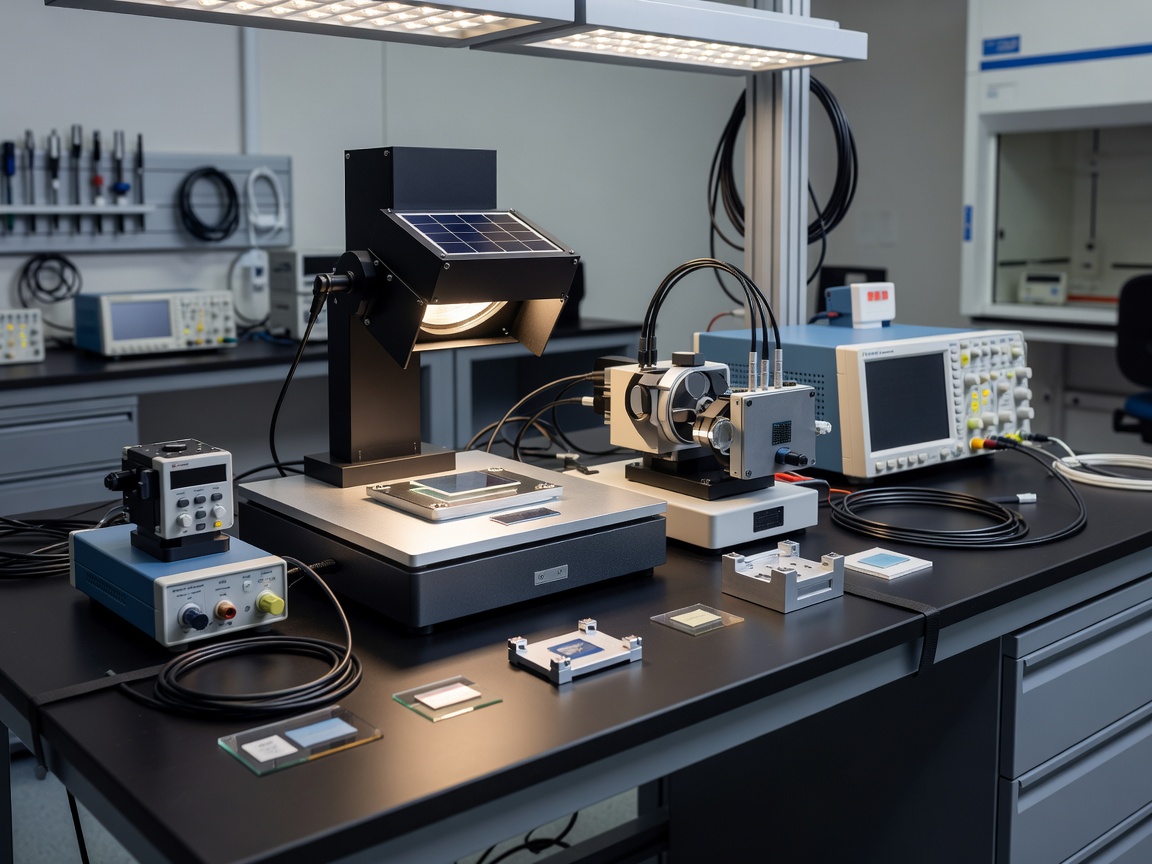
Device papers are often strongest on mechanism. They can report spectral transmission, current–voltage behaviour, external quantum efficiency and material characterisation. Independent electrical measurement and transparent methods improve confidence. Repeated samples and uncertainty reporting help distinguish a reproducible result from a selected best device.
Read the physical dimensions carefully. A small active area permits short collection paths and controlled fabrication conditions. Scaling may increase resistive losses, coating defects and optical non-uniformity. If optical and electrical figures refer to different samples, do not combine them into a single implied product. Laboratory evidence remains valuable when its limited scope is accurately described.
Level two: representative glazing prototypes
A full-size prototype helps test uniformity, handling and assembly compatibility. It can reveal visible defects or wiring challenges that a small sample conceals. The evidence becomes more useful when the prototype includes the intended glass, electrodes, encapsulation and edge system, rather than simply enlarging an isolated active film.
Look for measurements before and after assembly. Changes in transmission, output or appearance can identify losses introduced by lamination or sealing. Qualification testing should describe the exact configuration and exposure sequence. A test conducted on one component cannot automatically be extended to the entire window, and an accelerated test is not a direct calendar-life guarantee.
Level three: monitored installations
An operating installation can reveal the combined effects of weather, orientation, shading, electronics and maintenance. Useful reporting gives the location, installed area, rated capacity, monitoring period, sensor locations, data availability and energy measurement boundary. It distinguishes direct-current generation from alternating-current delivery and identifies periods when the system was offline.
Normalisation requires care. Energy per square metre of active cell area is not interchangeable with energy per square metre of façade. Energy per installed kilowatt helps compare some operating conditions, but it does not capture how much transparent area was needed to install that capacity. Publish both relevant area and capacity information where available.
A single short monitoring period cannot establish multi-year degradation or seasonal behaviour. A missing month should remain visible rather than being silently filled with a favourable estimate. Modelled gap-filling can be legitimate, but its method and contribution must be disclosed.
Use real precedents without borrowing their conclusions
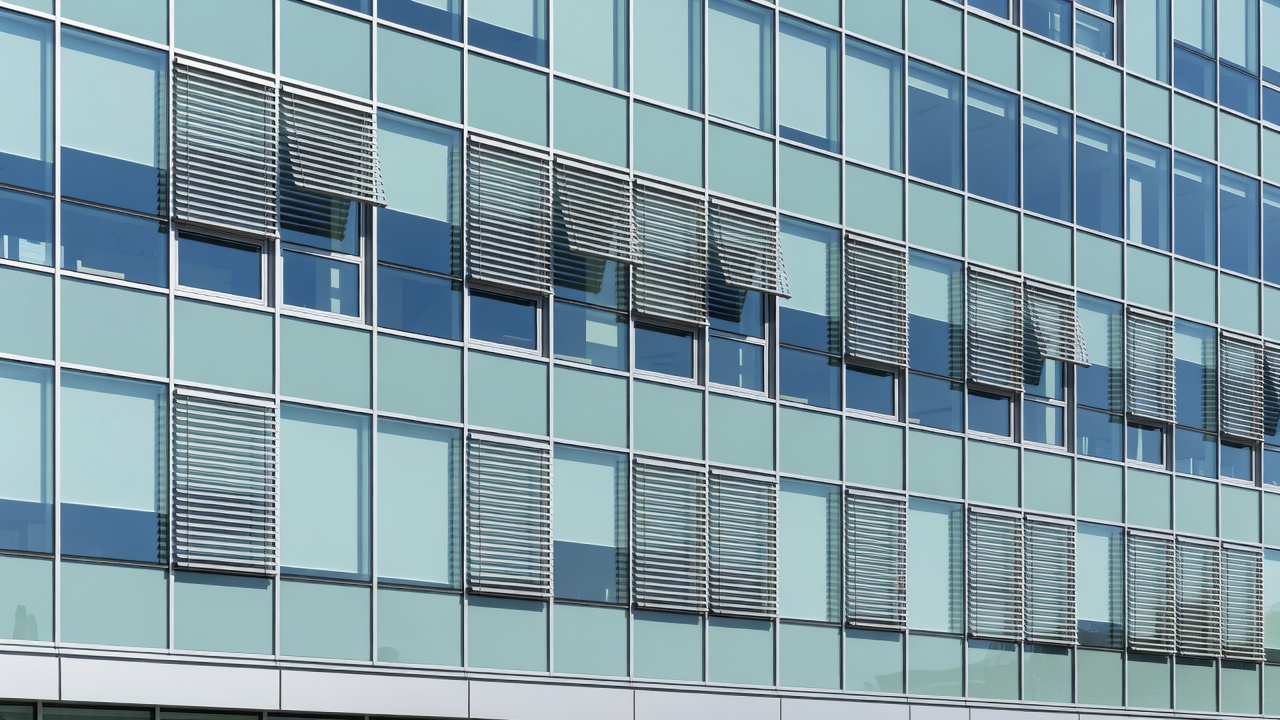
Building-integrated photovoltaics already include opaque cladding, roof elements and semitransparent glazing. These precedents provide useful experience with façade integration and maintenance, but they do not validate every emerging transparent absorber. A result from patterned crystalline-silicon glazing cannot establish the stability of an organic film or a luminescent concentrator.
The International Energy Agency Photovoltaic Power Systems Programme, particularly Task 15, publishes work on building-integrated photovoltaics. Fraunhofer ISE and EPFL also provide research contexts for photovoltaic technologies and integration. Their publications are useful starting points, not blanket endorsements of products or a substitute for project-specific evidence.
Research starting points: IEA PVPS Task 15, Fraunhofer ISE and EPFL. This desk is independent and is not affiliated with these organisations.
Make the missing evidence explicit
| Available evidence | Supports | Does not establish alone |
|---|---|---|
| Characterised small device | Measured device behaviour | Façade-scale output |
| Representative glazing prototype | Assembly feasibility | Long-term field reliability |
| Monitored installation | Operation at that site and period | Universal economics or lifetime |
Costs need the same discipline. A quoted material cost is not an installed system cost, and a projected manufacturing cost is not a market price. Installation access, electrical work, replacement and the value of the displaced glazing all affect the comparison. Without these boundaries, a payback claim is incomplete.
The defensible conclusion may be narrower than a headline: a promising mechanism, a workable prototype, or a documented installation under particular conditions. That is not a failure of the research. It is the point at which a useful next question can be asked without inventing a forecast.
Continue to the question ledger →